
 Search
Menu
Search
Menu
- Subscriptions 2015(0)
- Africa(176)
- Accessories and Literature(121)
- North America(411)
- South America(144)
- Australia and Oceania(52)
- Asia(184)
- Banknotes(35)
- Bulion(65)
- Euro(517)
- Wholesale(176)
- Europe(951)
- Belarus(2)
- Lithuania(12)
- Latvia(18)
- Transnistria(35)
- Russia(115)
- Ukraine(635)
- Isle of Man(41)
- other(31)
- Poland(1090)
- Thematical(1420)
- Sets(381)
- Golden Coins(52)
- New products
- Products on sale

$8.02
Regular price:
$8.30
$15.21
Regular price:
$19.36

$11.89
Regular price:
$12.44
$11.06
Regular price:
$13.83
$7.74
Regular price:
$8.30
$7.47
Regular price:
$8.30

$0.97
Regular price:
$1.66
$6.36
Regular price:
$6.91
$8.85
Regular price:
$9.13

$8.02
Regular price:
$8.30

$8.02
Regular price:
$8.30

$6.91
Regular price:
$9.68

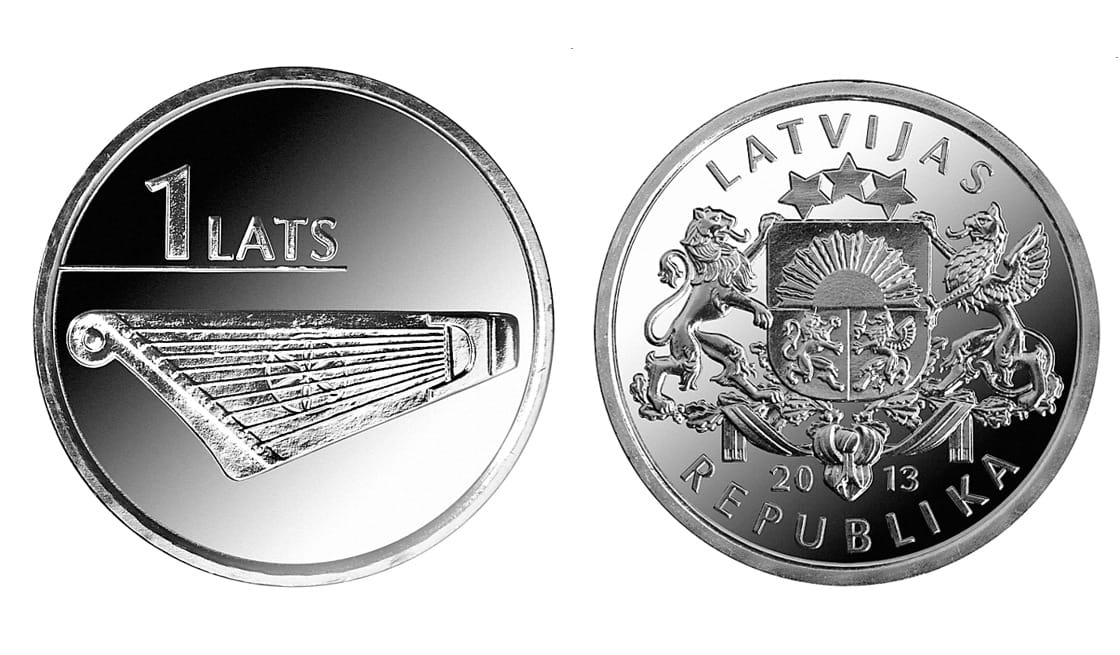
Łotwa 1 łat Harfa 2013
Regular price:
product unavailable
add to wish list
5

Description
Dane monety:
| Stan | I unc prosto z rolki |
| Nominał | 1 łat = 6,5 pln |
| Waga | 4,8 g |
| Średnica | 21,75 mm |
| Nakład | 500 tys. |
| Stop | CuNi |
| Rok | 2013 wysyłka natychmiast! |
Kokle
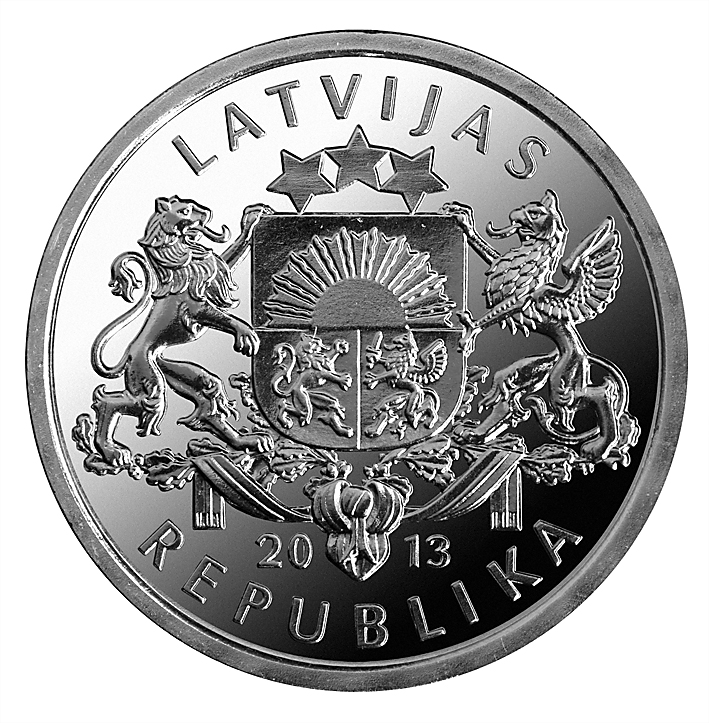
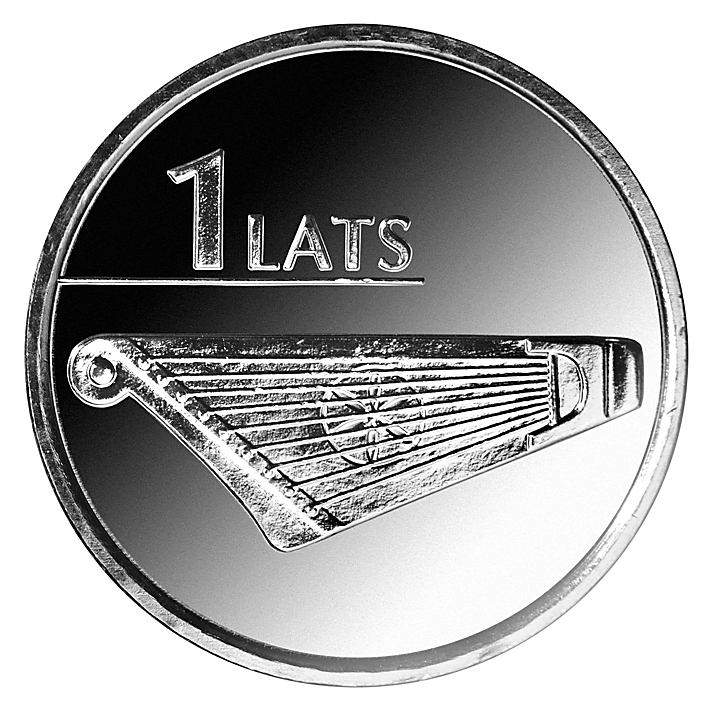
Face value: 1 lats
Weight: 4.80 g, diameter: 21.75 mm
Material: cupro-nickel
Struck in 2013 by Staatliche Münzen
Baden-Württemberg (Germany)
Artists: Anna Heinrihsone (graphic design), Ligita
Franckeviča (plaster model).
Raven’s sitting in the oak tree,
Golden kokle in his hand.
This Latvian folk song, arranged by Jānis Cimze, is sung by young and old alike. It is a narrative that unites various regions of the country as well as the two worlds of sound: the one given to us by nature and the one created by man. The sound of the kokle is associated with gold here, alluding to its special role in both festivities and everyday life.
As the kokle is an instrument originating with the ancient Balts and borrowed by the nearby Finno-Ugric tribes (e.g. the Liv kāndla, Finnish kantele, Estonian kannele) and Slavic peoples (Russian gusli), it is also a symbol of kinship and friendly relations.
The kokle sound has also been a uniting element for Latvia's regions. The Kurzeme kokle and the Latgale kokle have been played also in Vidzeme, the features of Latgale kokle have sometimes been added to Kurzeme kokle in Sēlija. In Kurzeme, the instruments were made roundish, with various ornaments and carvings, and five (later up to 17) strings. The Latgale kokle has a wing that acts as an amplifier and can also be used as a support for one's arm. It is bigger, heavier, with more modest adornments and 7–9, later 17–23, strings.
The kokle has a hollow trapeze-shaped body covered by a thin deck. The pegs for the strings are made of wood and worked into the wider part of the body, whereas the narrow end has a metal bar around which the strings (made of intestines, plant fibres, brass or steel) have been entwined. To play the kokle, it is held on one's lap, put on the table or hung over one's shoulder. One plays the strings with the tips of the fingers of the right hand, whereas the left hand mutes the redundant ones. The kokle has been tuned in various ways, primarily diatonically. The lower string usually acts as a drone: it sounds continually.
Kokles have traditionally been made of linden and played also together with a pipe, violin and drum.
The kokle has retained, regained and expanded the circle of its adepts and fans, being reborn, along with other old traditions, in musical groups and individual musicians. Making a kokle takes a long time, yet there are quite a few people interested in learning the craft. The kokle is one of the instruments learnt both in music schools and colleges as well as at the Latvian Academy of Music.
Kokle concerts are a traditional part of the Nationwide Latvian Song and Dance Festival, but in 2013 they will be held also in the regions. On 14 July, Saulkrasti will host a kokle festival as part of the city festival, and at the end of July and beginning of August, the Second International Festival "The Kokle and Similar Instruments around the Baltic Sea" will take place in Limbaži.
Related products
Łotwa 1 łat Bałwanek 2007

Łotwa 1 łat Choinka Bożonarodzeniowa 2009
Łotwa 1 łat Dzwoneczki świąteczne 2012
Łotwa 1 łat Jeż 2012
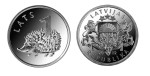
Łotwa 1 łat Kominiarz na szczęście 2008
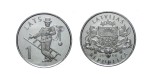
Łotwa 1 łat Kufel 2011
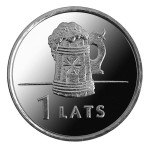
Łotwa 1 łat Lilia 2008

Łotwa 1 łat Pierścień Namejs 2009

Łotwa 1 łat Podkowa do góry 2010
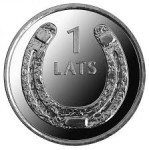
Łotwa 1 łat Ropucha 2010
Łotwa 1 łat Serce z piernika 2011

Łotwa 1 łat Sowa Fibula 2007
 Login
Login